
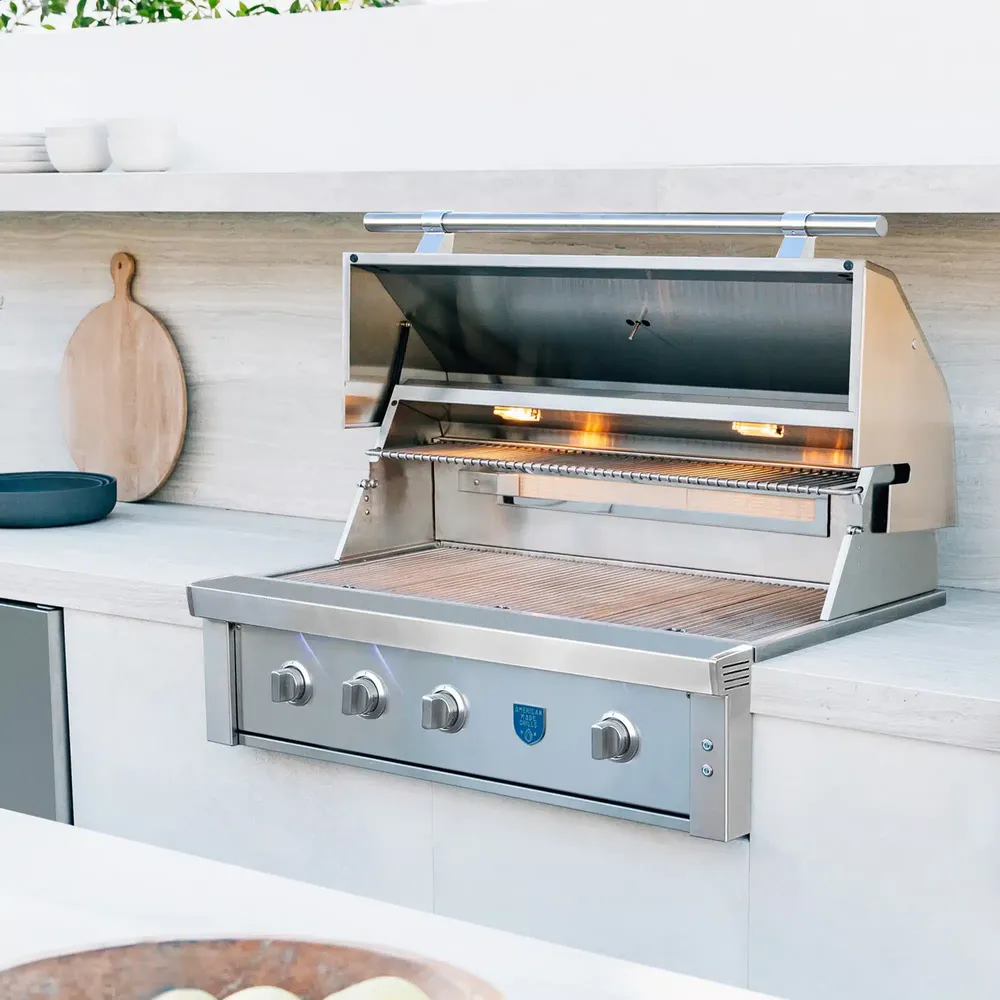
- Full teardownEvery removable part comes out.
- 212°F steamLoosens carbon without harsh chemicals.
- Tune-up includedInspection and adjustments every visit.
- PhotosBefore and after, every job.
What's included
Not a wipe-down.
A teardown.
A brush and a hose only reach the grates. The grease that causes flare-ups, uneven heat and rust sits underneath, so that's where we spend most of our time.
- Cooking grates, warming racks and secondary cooking surfaces
- Flavorizer bars, briquette trays, ceramic briquettes and heat shields
- Burners and burner ports cleared, plus accessible igniter electrodes
- Firebox and inside of the hood scraped, steamed and vacuumed
- Grease tray, drip pan and grease cup emptied and cleaned
- Hood, knobs, control panel and side surfaces cleaned and finished
- Visual inspection of every accessible part, plus a tune-up
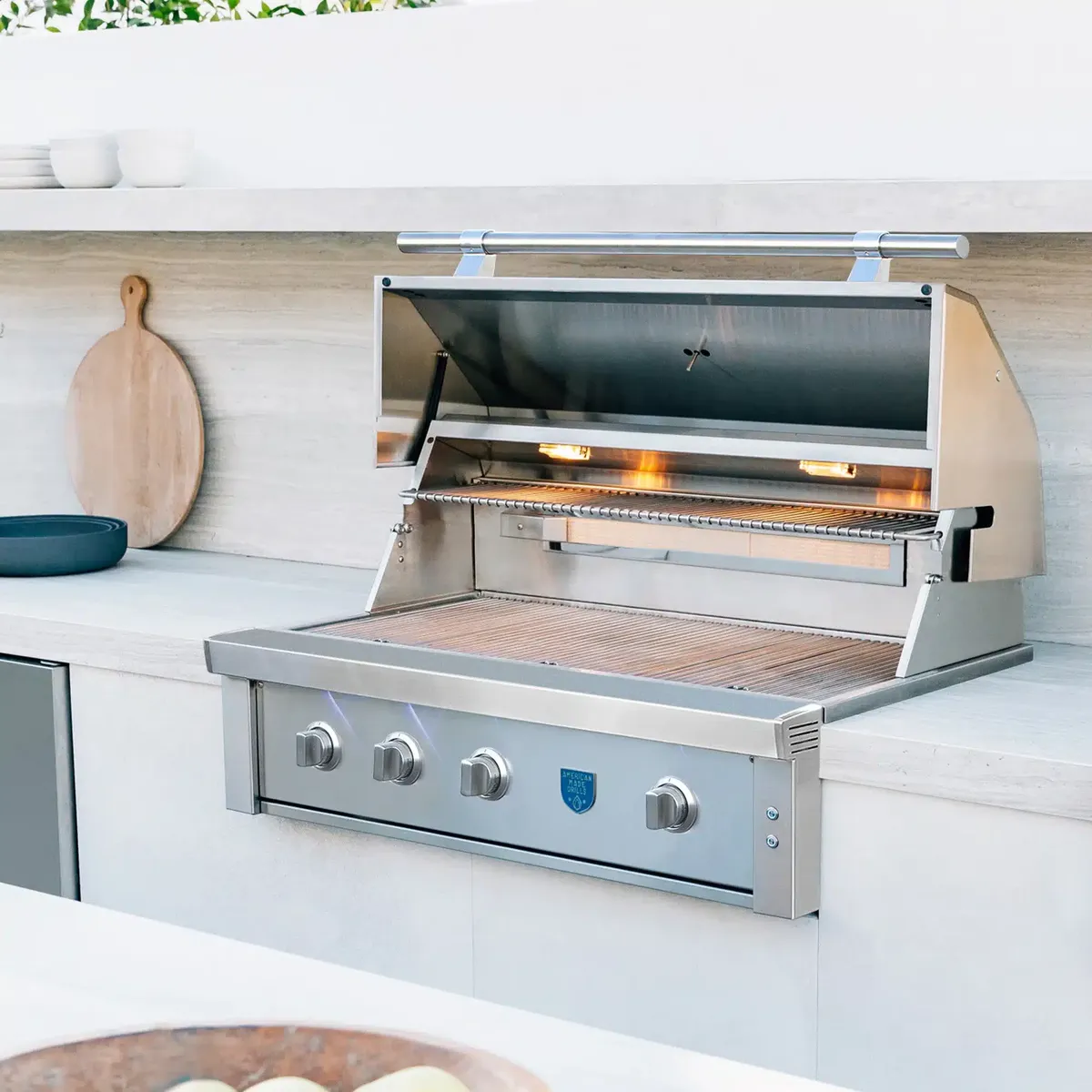
How a cleaning works
Eight steps, every grill
Protect
Tarps and drop cloths go down around the grill, counters, cabinets and plants.
Take it apart
Grates, racks, heat plates, burners and the grease tray come out.
Scrape and brush
Loose carbon and grease come off every surface by hand.
Degrease
A water-based, biodegradable degreaser breaks down the heavy grease.
Steam
Steam at about 212°F loosens baked-on carbon and rinses parts clean.
Vacuum
Ash, carbon and debris get vacuumed out of the firebox and cabinet.
Inspect and tune
With the grease gone, we check burners, igniters and valves and make adjustments.
Reassemble and test
Everything goes back, we light every burner and clean up the work area.
How we set up
Set up with care.
Cleaned by hand.
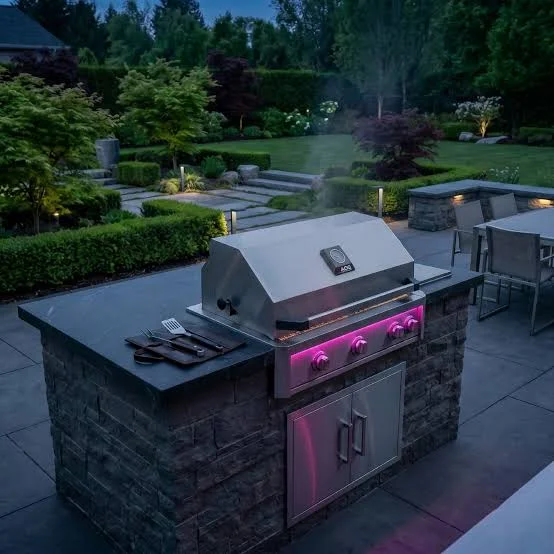
Before anything comes apart, your patio, counters and plants get covered. Then the work is done by hand, without pressure-washer blasting.
Why a professional grill cleaning matters
Grease is a fire risk
Grease collects on heat plates, in the firebox and in the drip tray every time you cook. Enough of it, and a hot grill can flare up or start a grease fire. Clearing it out is the single biggest safety reason to clean a grill.
Even heat and better food
Most "my grill has hot spots" problems are clogged burner ports, not broken parts. Clean burners put out an even blue flame, and clean grates and heat plates stop old carbon from smoking onto your food.
A grill that lasts longer
Grease holds moisture against the metal, which is how burners, heat plates and grates rust out. That's especially true in Orange County's coastal air. Regular cleaning is the cheapest way to keep a good grill going for years.
Add-ons
These can be added to any cleaning:
- Grate restoration. A power brush and steam to bring stainless grates back closer to their original finish. Best for surface rust; badly worn grates are better replaced.
- Side burners and griddles. Cleaned the same way as the grill.
- Outdoor kitchen surfaces. Counters, access doors, drawers and sinks.
- Outdoor range hoods and refrigerators. Degreased and cleaned.
- Rodent cleanup. Nests and droppings removed from cabinets and fireboxes, with damaged wiring flagged for repair.
What a cleaning can't do
We'd rather be straight with you up front. Cleaning removes grease and carbon, but it can't repair a part that has failed, and it can't undo permanent staining, heat discoloration or rust that has eaten into the metal. Parts that are badly rusted can break when they're removed, so tell us if you know of any. If we find something worn out, we'll show you and quote the repair or a replacement before doing anything.
Grills we clean
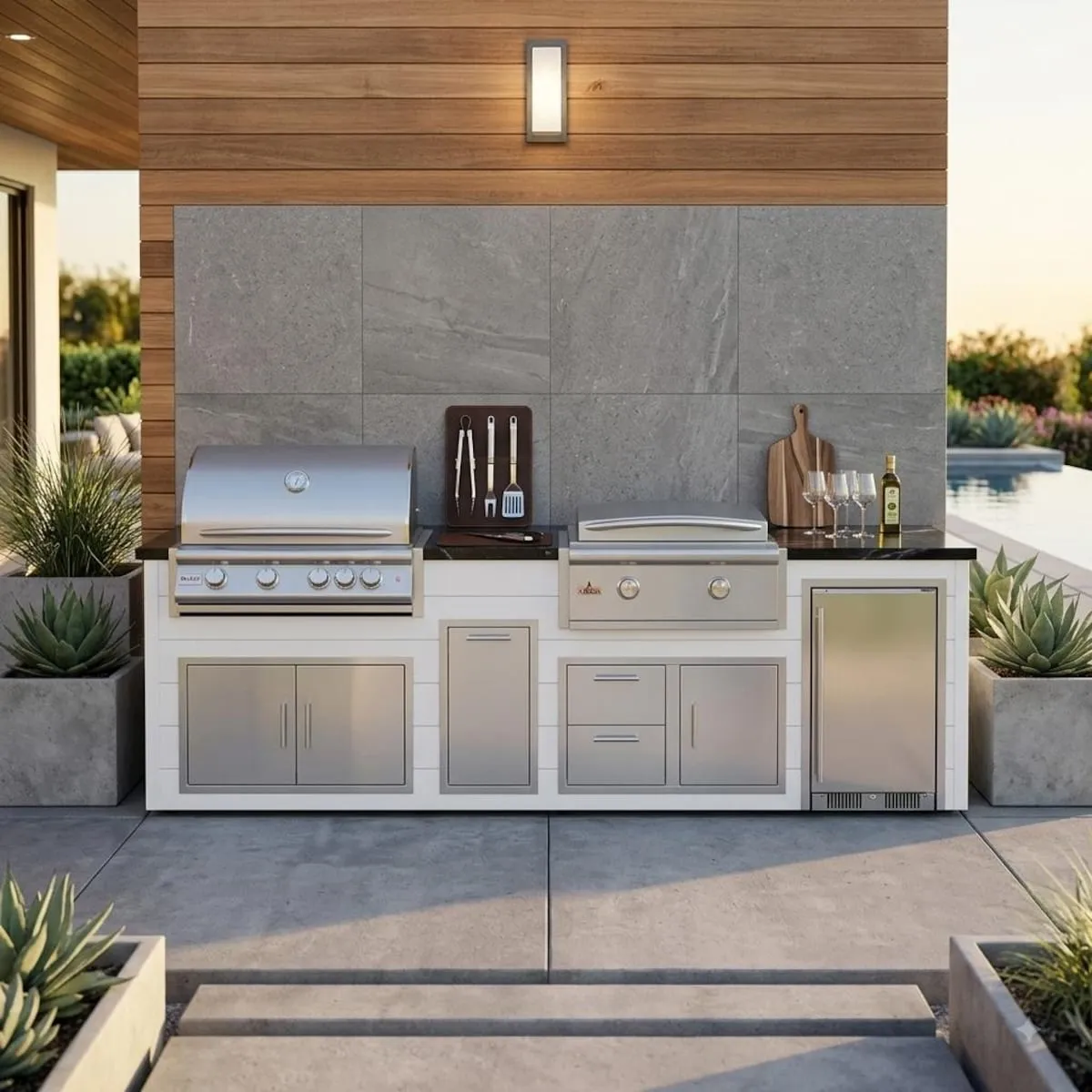
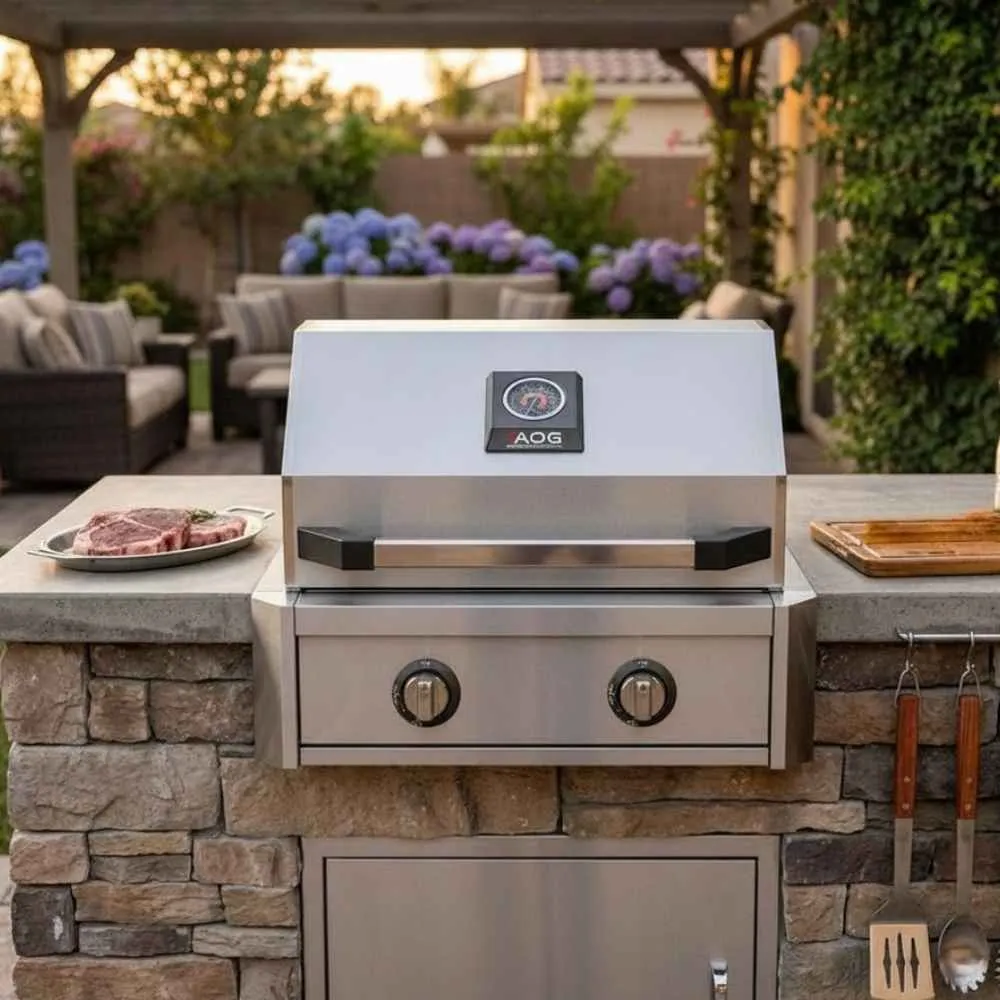
Built-in grill heads, freestanding gas grills, pellet grills, charcoal and kamado grills, and smokers, from every major brand including Lynx, AOG, Blaze, American Made Grills, DCS, Viking, Hestan, Fire Magic, Alfresco, Twin Eagles, Weber and Traeger. See the full brand list.
How often to clean a grill in Orange County
Our mild weather means most people grill year-round, so grease builds up without a winter break. Coastal homes deal with salt air, and canyon homes deal with dust, leaves and critters. For most households, a professional cleaning every 6 to 12 months keeps the grill lighting evenly and lasting longer. Near the coast or in the canyons, twice a year is better. Find your city.
Cleaning questions
How long does a BBQ cleaning take?
Most cleanings take 3 to 4 hours. Large built-ins with side burners and full outdoor kitchens can take longer.
How often should a grill be professionally cleaned?
Every 6 to 12 months for most homes. Grills near the coast, in the canyons, or used several times a week do better with two cleanings a year.
Do I need to be home during the cleaning?
No. We need access to the grill and a water hookup. You get before and after photos either way.
Do you use a pressure washer?
No. We clean by hand with steam, scrapers, brushes, a vacuum and a water-based biodegradable degreaser. Pressure washing can force water into valves and electronics and spray grease across your patio.
Will my grill look brand new?
It will be clean, but cleaning can't undo permanent staining, heat discoloration or rust that has eaten into the metal. If a part is worn out, we'll show you and quote a replacement.
Is a grill cleaning safe for my patio and countertops?
Yes. Tarps and drop cloths go down around the grill, counters, cabinets and plants before any work starts, and we clean up the work area before we leave.
Ready for a clean grill?
Book online and we'll confirm your time, or call or text 949-368-7438.
Read about our eco-friendly approach.